Choosing between portable and fixed vehicle scales depends on what you’re weighing, how often you need to weigh vehicles and whether the scale needs to be moved between locations. Both types are designed to measure vehicle weight, but they suit different applications.
Understanding the differences between portable and fixed vehicle scales can help you decide which type is better suited to your needs. If you’re unsure, the Safety Dave team can help explain the differences and what to consider when choosing a vehicle scale.
What Are Portable Vehicle Scales?
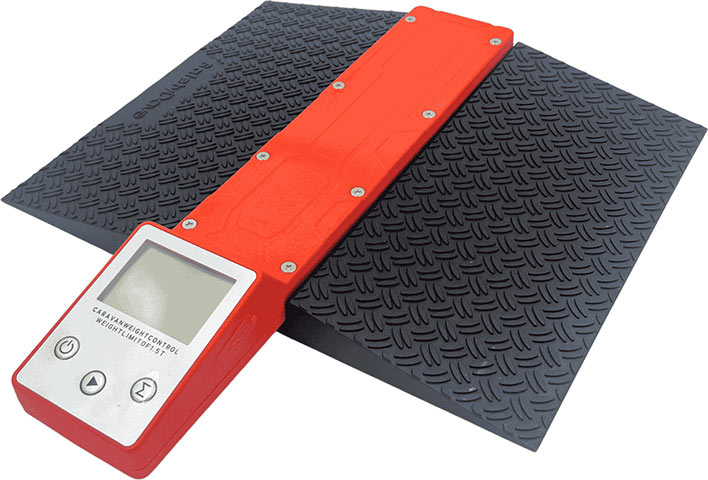
Portable vehicle weighing scales are designed to be transported and set up wherever they’re needed. Unlike permanently installed systems, they can be moved between locations, making them useful when flexibility is important.
Portable axle scales and mobile vehicle scales can be used for weighing:
- Cars and SUVs
- Caravans and camper trailers
- Boat and equipment trailers
- Motorhomes
- Commercial vehicles
Because they’re easy to transport and store, portable vehicle scales are particularly useful when vehicles need to be weighed in different locations or when a permanent weighing system isn’t required.
What Are Fixed Vehicle Scales?
Fixed vehicle scales are permanently installed weighing systems designed for locations where vehicles are weighed regularly.
Often referred to as weighbridges, fixed vehicle scales are commonly used at:
- Transport depots
- Waste and recycling facilities
- Quarries
- Industrial sites
- Distribution centres
- Manufacturing facilities
Fixed vehicle scales require permanent installation and dedicated space, making them better suited to locations where larger numbers of vehicles need to be weighed regularly.
Portable vs Fixed Vehicle Scales
Both systems can provide accurate weight measurements when the appropriate scale is used correctly, but they differ in how they’re used.
| Feature | Portable Vehicle Scales | Fixed Vehicle Scales |
| Installation | Minimal setup | Permanent installation |
| Mobility | Can be transported between locations | Fixed in one location |
| Accuracy | Depends on the scale and correct use | Depends on the system and correct use |
| Capacity | Varies depending on the scale | Generally suited to higher-capacity vehicle weighing |
| Cost | Generally lower initial cost | Higher installation cost |
| Best suited to | Portable or occasional weighing | Regular, high-volume weighing at a permanent location |
The best choice depends on your weighing requirements, how often vehicles need to be weighed and whether you need the flexibility to move the equipment between locations.
Which Vehicle Scale Is Right for You?
The best choice depends on how the scale will be used.
Portable vehicle scales may be the better option if you:
- Need to weigh vehicles in different locations
- Need equipment that can be easily transported and stored
- Only need to weigh vehicles occasionally
- Don’t have space for a permanently installed weighing system
Fixed vehicle scales are generally better suited if you:
- Weigh vehicles regularly throughout the day
- Operate from one permanent location
- Weigh larger commercial vehicles
- Require a dedicated weighing station
- Have consistently high vehicle volumes
Thinking about how often you’ll use the equipment, the types of vehicles you’ll be weighing and whether portability is important will help you decide which type of vehicle scale is better suited to your needs.
Maintenance and Long-Term Ownership
Both portable and fixed vehicle scales require appropriate care and maintenance to provide accurate measurements over time.
Portable vehicle scales are generally easier to access, clean and store, while fixed vehicle scales may have different maintenance requirements due to their permanent installation and regular use. Calibration requirements will depend on the scale, how often it is used and the manufacturer’s recommendations.
Following the manufacturer’s instructions for use, storage, maintenance and calibration will help keep the scale operating correctly.
Making the Right Choice
There isn’t a single solution that’s right for everyone.
If flexibility, portability and convenience are important, portable vehicle weighing scales are often the preferred choice. Operators working from a permanent site with high daily vehicle volumes may benefit more from fixed vehicle scales or a weighbridge.
Safety Dave offers portable vehicle scales for checking vehicle and towing weights. If you’re unsure whether one of our scales is suitable for what you need to weigh, simply give us a call and our team can help you work it out.
Portable vs Fixed Vehicle Scale Questions Answered
Are portable vehicle scales legal?
Yes. Portable vehicle scales can be used in Australia, but whether a particular scale or weight measurement is suitable for legal or compliance purposes will depend on the scale, how it is being used and the relevant requirements. Always check the scale’s specifications and any applicable regulations if the measurement is being used for compliance purposes.
Do portable vehicle scales need a level surface?
Yes. Portable vehicle scales should be used on a firm, level surface and set up according to the manufacturer’s instructions. An uneven or unstable surface can affect how the vehicle sits on the scales and may affect the accuracy of the measurements.
How long do portable scales last?
The lifespan of a portable vehicle scale depends on how often it is used, the conditions it is used in and how well it is maintained and stored. Following the manufacturer’s instructions for use, storage, maintenance and calibration will help keep the scale operating correctly for longer.
How many portable vehicle scales do I need?
You don’t necessarily need a scale for every wheel. A portable wheel scale can be used to measure each wheel individually, with the readings used to determine axle and overall vehicle weight. Using multiple scales can allow more wheels to be measured at the same time, depending on the type of scale and weighing setup. Always follow the manufacturer’s instructions for the scale you’re using.